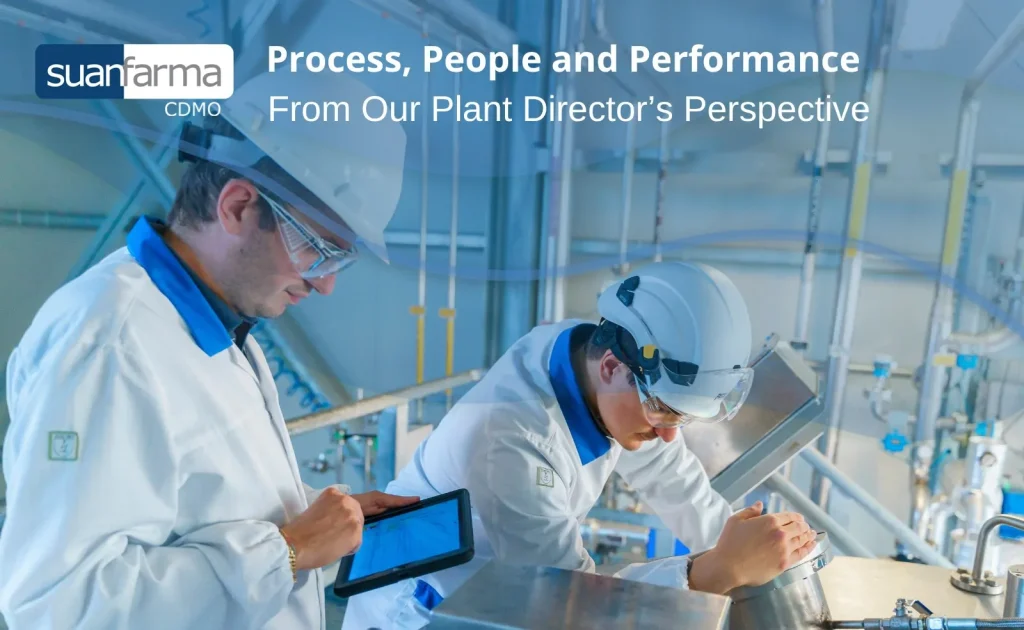
Rovereto plays a key role within Suanfarma’s CDMO network, combining long-standing industrial experience with specialized fermentation capabilities, advanced automation and a strong culture of continuous improvement.
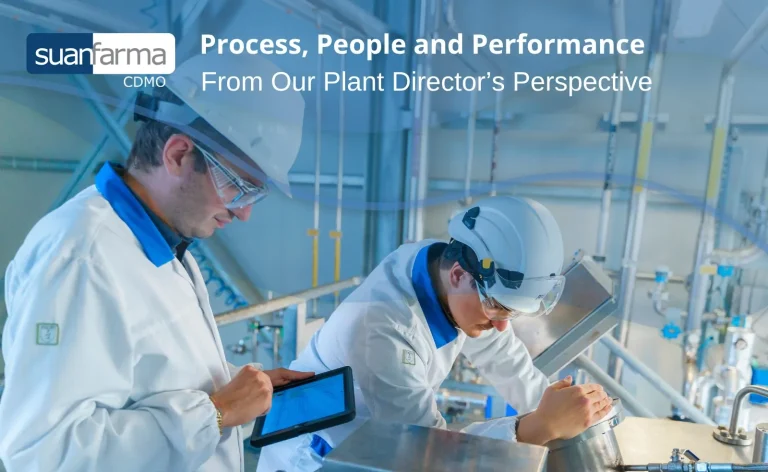
In this interview, Matteo Ottavian, Plant Director at Rovereto, shares his perspective on the capabilities that define the site today, the importance of process control and operational discipline, and the connection between technical decision-making and people leadership. He also reflects on Rovereto’s future contribution to Suanfarma’s industrial development and its ambition to remain a trusted partner for complex projects, technology transfer and reliable commercial manufacturing.
- Rovereto is a key site within Suanfarma’s CDMO network. What are the main capabilities that define the plant today?
When I think about Rovereto today, I see a site that has built its identity around three core pillars: strong fermentation expertise, a high level of automation, and a deeply rooted continuous improvement mindset.
Fermentation is at the heart of what we do. Over the years, we have developed solid capabilities in managing complex biological processes at industrial scale — where variability is inherent and control is critical. What makes the difference is not just the equipment, but the know-how of our teams in stabilizing processes, optimizing yields, and ensuring consistent product quality batch after batch.
This is where automation plays a key role. We have progressively invested in advanced control systems and data-driven operations to increase process robustness and reproducibility. Automation allows us to reduce variability, improve traceability, and react faster when deviations occur — which is essential in a GMP environment.
At the same time, we continuously challenge our processes. Even for well-established products, we maintain a strong focus on improving yields, simplifying operations, and reducing environmental impact. This continuous improvement mindset is embedded across the organization, from the shop floor to technical and engineering teams.
Ultimately, Rovereto is not just a manufacturing site — it’s a place where biological complexity, technology, and operational discipline come together.
And this combination is what allows us to be a reliable and forward-looking partner in the CDMO space.
- Process control and operational discipline are essential in pharmaceutical manufacturing. What systems or practices help ensure consistency, efficiency, and reliability in daily operations?
Building on what I mentioned earlier, when you operate complex processes like fermentation at scale, process control and operational discipline are not optional — they are what ultimately define your performance.
In Rovereto, we rely on a combination of systems and daily practices that reinforce each other.
First of all, automation and advanced control systems play a central role. They allow us to closely monitor critical process parameters, reduce variability, and ensure that each batch is executed within a well-defined design space. But technology alone is not enough — it needs to be supported by clear standards and disciplined execution.
This is why we put strong emphasis on standardization: well-defined procedures, clear operating windows, and real-time visibility of performance. Operators and supervisors are not just executing tasks, they are actively managing the process, with the right data at their fingertips.
Another key element is how we manage deviations and continuous improvement. Every deviation is treated as a learning opportunity, with structured root cause analysis and a strong focus on preventing recurrence. Over time, this builds process robustness and increases confidence in execution.
Finally, I believe consistency comes from culture as much as from systems. Creating a mindset of ownership on the shop floor — where people feel responsible not only for performing an operation, but for its outcome — is what really drives reliability day after day.
In the end, efficiency and compliance are not conflicting objectives. When process control, automation, and discipline are aligned, they naturally lead to both.
- As Plant Director, your role goes beyond overseeing production processes. How do you balance technical decision-making with leading and motivating people?
One of the biggest shifts I experienced moving into a Plant Director role is realizing that technical decisions and people leadership are not separate responsibilities — they are deeply interconnected.
Earlier in my career, I tended to focus on finding the best technical solution. But in a complex manufacturing environment, the real question is not only what the right decision is, but also how the organization is able to execute it consistently.
Today, when I face a technical challenge, I always look at it from two perspectives. On one side, I rely on data, process understanding, and structured problem-solving to define the right direction. On the other, I focus on how to involve the team — making sure that the rationale is clear, responsibilities are defined, and people feel ownership of the solution.
I’ve seen many technically sound decisions fail simply because they were not fully understood or embraced on the shop floor. Conversely, when teams are engaged and accountable, even complex changes can be implemented smoothly and sustainably.
This is why I spend a significant part of my time on alignment and communication — translating technical priorities into clear expectations, and creating an environment where people are confident to act and to challenge when needed.
In the end, I don’t see my role as choosing between technical depth and leadership. It’s about connecting the two: using technical insight to set direction, and strong leadership to make sure that direction becomes reality.
- Looking ahead, what do you see as the main opportunities for the Rovereto site within Suanfarma’s future industrial development?
Looking ahead, I see a strong opportunity for Rovereto to further position itself as a trusted and reliable partner within Suanfarma’s CDMO network — especially for customers looking for both technical capability and execution certainty.
One of our greatest strengths is our long-standing track record in commercial manufacturing. We are not a site that is only strong in development or scale-up — we have decades of experience in running products at industrial scale, consistently and compliantly. In today’s environment, where supply reliability is critical, this makes a real difference for our partners.
At the same time, we have the capabilities to support new and more complex projects, particularly in areas like fermentation, where demand is growing and technical barriers are higher. The combination of biological know-how, automation, and process control that we discussed earlier positions us well to take on these challenges with confidence.
What I see as a key opportunity is exactly at the intersection of these two elements: bringing new molecules or processes into a site that already has a strong culture of operational discipline and reliability. This significantly reduces risk for our partners, especially during technology transfer and industrialization phases.
Ultimately, our ambition is not just to be a manufacturing site, but to be the place where customers feel confident scaling and supplying their products long term.
Because in our industry, trust is built over time — and our history of consistent delivery is one of our most valuable assets.